
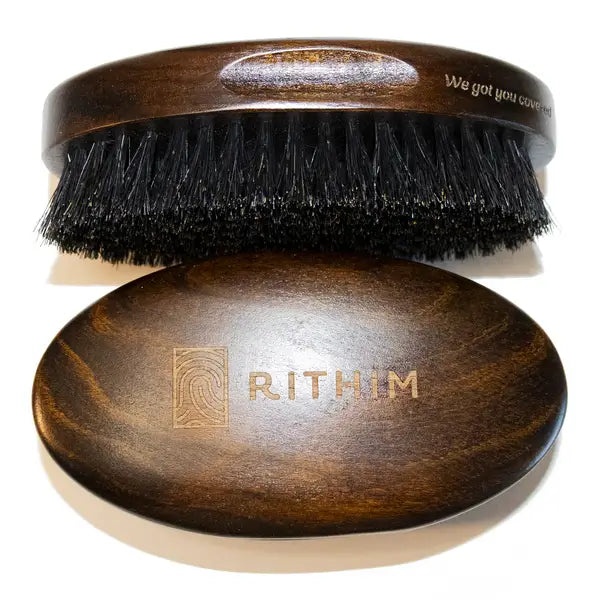
Beard brush made of natural boar bristles & cherry wood
Frequently bought together
Add the complete combination in one click
The Rithim® beard brush has a traditional look of dark cherry wood and high-quality pure boar bristles. Unlike synthetic hair, boar hair is soft and will not damage your beard hair.
The ergonomic grip with notches on both sides gives you optimal control while brushing.
The brush is perfect for use with your favorite beard oil or balm from Rithim®. Not only do you model your beard, but you also effortlessly distribute the beard oil evenly over your beard. This ensures a beautiful natural shine. It also helps remove dust and excess dirt from your beard.
Brushing the beard hair stimulates the skin and gets your blood circulation going. This way you promote beard growth and keep your skin in top condition.
What it is made of
Unlike nylon, boar hair is close to human hair in structure. It picks up the oil at the root and drags it down the length instead of just pushing hair around, which is why a brushed beard looks fuller without adding product.
Cherry is hard enough not to dent in a wash bag and closed-grained enough not to soak up oil and turn sticky. It also darkens slightly with use, so the piece ages instead of wearing out.
Sized to sit in your palm rather than to be held like a hairbrush. The notches on both sides stop it slipping when your hands are wet, which is when most people actually use it.
Your beard routine in 5 steps
Premium care for any beard length
-
1Start with a damp beard and oil
Brushing a dry beard is what causes split ends. Work beard oil through a towel-dried beard first; the brush is there to spread it, not to replace it.
-
2Open it up with the coarse side
Take the wide-spaced teeth and work from the tips upward, not from the roots down. Starting at the root drags every knot with you and tears hair; starting at the tips lets each knot come apart on its own.
-
3Brush against the grain, then with it
Brush upward and outward first to lift the hair off the skin and spread the oil to the roots, then brush down to lay it flat. This is also what trains a beard to grow in one direction instead of sideways.
-
4Shape with the fine side
Finish with the narrow teeth along the jawline and the moustache. This is the step that decides whether a beard looks groomed or merely clean.
-
5Clean the tools, not just the beard
Pull the loose hair out of the brush weekly and wipe both with a dry cloth. Never soak the wood: water gets into the grain, swells it and lifts the bristles out of their seats.