
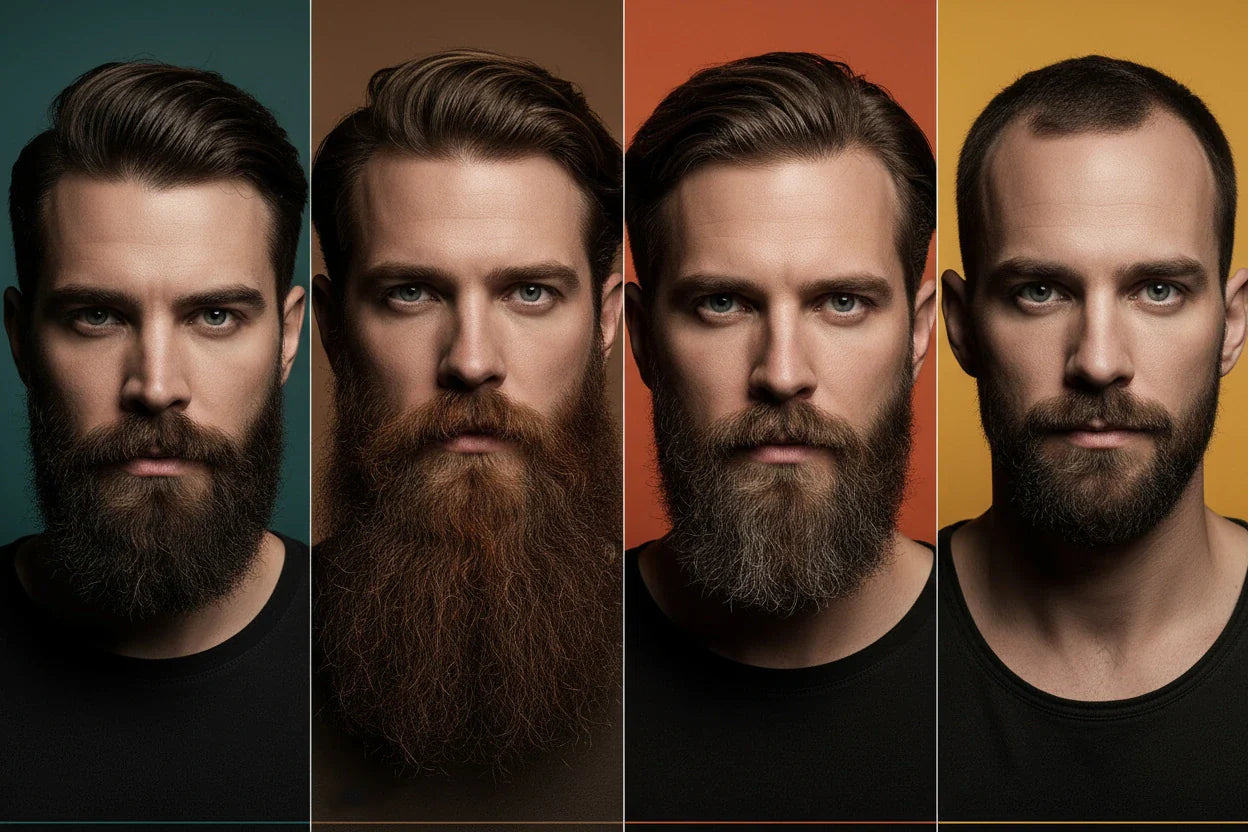
A beard that looks great on one man can look completely wrong on another, not because of beard quality or grooming skill, but because of face shape. The goal of beard styling isn't to grow the most beard possible; it's to use beard shape strategically to create the appearance of a more balanced, proportional face. Understanding your face shape is the first step to understanding which beard choices will work for you.

- The six main face shapes are oval, round, square, rectangular/oblong, diamond and heart
- Oval faces are the most versatile, most beard styles work well
- Round faces benefit from length at the chin and shorter sides to create the illusion of elongation
- Square faces benefit from rounded beard shapes that soften angular jawlines
- The goal is always to move toward a more oval proportional appearance
How to Identify Your Face Shape
The most accurate method: pull your hair back and look directly into a mirror. Trace the outline of your face on the mirror with a lip liner or whiteboard marker. Step back and assess the shape. Alternatively, take measurements:
- Forehead width: measure across the widest point of the forehead, between the hairline
- Cheekbone width: measure across the widest point of the cheeks
- Jawline width: measure across the jaw just below the ears
- Face length: measure from hairline to chin
Compare these measurements: roughly equal measurements suggest a round or square face; significantly longer than wide suggests rectangular; forehead narrower than jaw suggests heart or triangle; cheekbones widest with narrow forehead and jaw suggests diamond.
Oval Face: The Most Versatile Shape
An oval face has balanced proportions, face length about 1.5x the width, with the forehead slightly wider than the jaw and gently rounded lines. This is widely considered the most balanced face shape for beard styling, and the reason is simple: most beard styles look good on oval faces.
What works: Almost everything, short stubble, medium corporate beard, full beard, long beard. The balance of the face means you're not trying to create an illusion of proportion; you're simply enhancing what's already there.
What to avoid: Very long, heavy beards that add significant length to an already well-proportioned face can make it appear too elongated. Keep length moderate unless that's a specific style choice.
Round Face: Create Length and Definition
A round face has roughly equal width and height, with full cheeks and a soft, rounded jawline. The goal with beard styling on a round face is to create the impression of length and a more defined jaw.
What works: A beard that's shorter on the sides and fuller at the chin. This adds vertical length and draws the eye downward, elongating the appearance of the face. A goatee-style shape or a beard with the bulk concentrated at the chin achieves this well. Some length at the chin, even 3–4cm, creates clear elongation.
What to avoid: Full, wide beards with equal volume on the cheeks and chin increase the perception of roundness. Very short, even stubble doesn't create enough definition at the jawline to help.
"Beard styling is face architecture. You're using hair to build the proportions you want, it's one of the most versatile style tools available."
Square Face: Soften the Jaw
A square face has roughly equal width and height, but with a strong, angular jawline and relatively wide forehead. The jaw is the defining feature, prominent and geometric. The goal with beard styling is to soften this angularity while maintaining the masculine structure.
What works: A beard that rounds off the corners of the jaw. Medium length (3–5cm) with rounded edges at the jaw angles rather than sharp lines. A circle beard or rounded full beard shape. Keeping more length at the chin than on the sides maintains width-to-length balance while softening the sharp jaw corner.
What to avoid: Very precise, angular beard shaping that follows the natural jaw shape exactly, this accentuates rather than balances the angularity. Very short stubble provides minimal softening.
Rectangular or Oblong Face: Add Width
A rectangular face is significantly longer than it is wide, with roughly consistent width from forehead to jaw. The goal is to add the perception of width and reduce the perceived length of the face.
What works: Fuller sides with more volume on the cheeks and less at the chin. A shorter beard overall, longer beards add length to an already long face. A beard with clearly defined, full cheek coverage but minimal chin extension works best. A thick stubble to short beard of 5–15mm, kept even across cheeks and chin, adds apparent width without adding length.
What to avoid: Goatees and chin-heavy beard shapes that add visual length. Very long beards that extend significantly below the chin.
Diamond Face: Balance the Narrow Forehead and Jaw
A diamond face has prominent, wide cheekbones with a narrower forehead and jaw, the widest point is at the cheeks. The goal is to add width at the jaw and forehead to balance the prominent cheekbones.
What works: A beard with fullness at the chin to widen the lower face. Keeping the cheek lines natural and not heavily trimmed allows the cheek hair to soften the cheekbone-to-jaw transition. A short to medium full beard with a rounded chin works well for this face shape.
What to avoid: Beards that accentuate the cheekbones further, high, tight cheek lines that follow the angular cheekbone shape can emphasise the diamond shape rather than balancing it.
Heart Face: Balance the Wide Forehead
A heart-shaped face has a wide forehead and temples that taper significantly to a narrow chin. The goal is to add width at the jaw and chin to balance the prominent upper face.
What works: A beard with volume at the jaw and chin, a full beard that's fuller at the bottom than the top creates the balance the face shape needs. Keeping the cheek lines relatively tight near the ears and allowing more length and volume at the chin and jaw area achieves the most natural balance.
What to avoid: Very full, wide beards at the cheek level, adding more width at the top of the beard (near the temples and upper cheeks) exaggerates the already-wide upper face.
The Most Important Trimming Principle
Regardless of face shape: define your neckline and maintain it. Nothing undermines a well-shaped beard faster than an undefined or incorrectly placed neckline. Two finger-widths above the Adam's apple, arcing naturally around the neck. Everything below this line clean-shaved. This single line, maintained consistently, makes any beard look more intentional and well-groomed.
Keep Your Trimmed Beard Looking Sharp
Trimming is only half the work, daily care is what makes your shape last. After every trim, massage a few drops of beard oil into the hair and skin to soften new growth and prevent itch. For fuller or longer beards, finish with a touch of beard balm to hold the shape you just sculpted. A consistent grooming routine keeps your face shape definition visible for weeks, not days.


