
Growing a beard sounds simple enough. Then you actually do it, and discover that beard life comes with its own set of experiences, frustrations and unexpected moments of satisfaction. Whether you're on day 12 or year three, there are certain things that every bearded man understands completely. Here are ten of them.

- The awkward phase (weeks 3–6) is real, temporary and worth pushing through
- Beard maintenance takes longer than non-bearded men think and shorter than you'd expect once you have a routine
- Other bearded men form an unexpected silent brotherhood of mutual recognition
- Food gets involved in ways you don't anticipate
- A well-groomed beard genuinely changes how people respond to you
1. The Itch That Makes You Question Everything
Around weeks two to four of growing a beard, the itch arrives. Not mild, easily-ignored discomfort, a persistent, intrusive itch that makes you wonder whether any beard is worth this. The cause is the sharp tips of newly trimmed or newly growing hair pressing against the skin as the beard grows out.
Here's the truth: it passes. Usually by week five or six, the hair has grown past the sharp tip phase and the skin has adjusted. Beard oil significantly shortens this phase by hydrating the skin and softening the hair. Men who quit at week three because of itch are three weeks away from the beard they wanted.
2. The Moment It Finally Looks Like a Beard
There's a specific day, usually somewhere between week six and week ten, when you look in the mirror and it looks like a proper beard rather than extended laziness. The shape has come together. The length has reached a tipping point. It actually looks intentional.
This moment is different for everyone (beard growth rates vary significantly) but it's universal in its effect. The decision to keep going becomes instantly obvious. Some men describe it as one of those rare, purely uncomplicated moments of satisfaction.
3. Food Becomes a Tactical Challenge
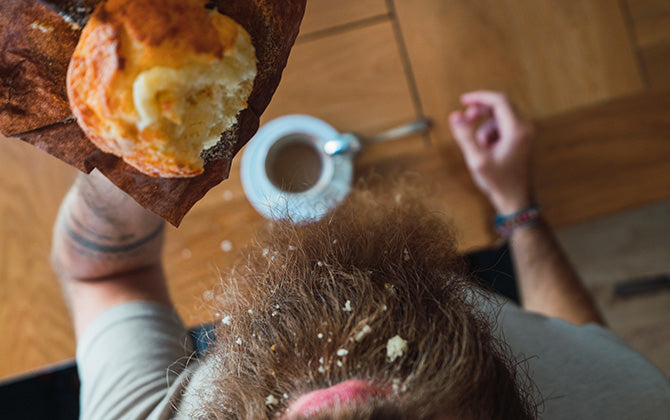
Soup. Noodles. Burgers. Burritos. Ice cream cones. These are no longer simple eating experiences, they require a new level of mindfulness that non-bearded people simply don't have to think about. The moustache in particular develops opinions about every meal.
Regular beard brushing and the occasional strategic wipe handle most situations. Some men develop specific food-management techniques (the two-handed approach to soup bowls, the napkin-under-lip method for burgers) that become second nature within weeks.
"No one tells you that getting a beard also means getting very good at eating carefully."
4. Other Bearded Men Acknowledge You
Once you have a beard, you start noticing other men with beards. Not aggressively, just a small nod, a brief mutual acknowledgment. It's not something you plan or consciously think about, but it happens reliably. The beard brotherhood is entirely real and entirely unspoken.
This extends to conversations. Strangers with beards are significantly more likely to comment on your beard, ask about your grooming products, or share their own beard journey than they ever would have been before. Beards are social objects in a way that clean-shaven faces simply aren't.
5. The Compliment from the Person You Least Expected
At some point, someone you didn't expect compliments the beard. Not a friend or family member being supportive, someone who has no particular reason to be positive about it. A colleague who's never mentioned your appearance. A stranger who just says it plainly. It usually lands differently than the supportive compliments from people who knew you before.
These moments tend to be quietly significant. They confirm something you already knew but hadn't quite acknowledged: the beard suits you.
6. The Grooming Routine You Didn't Think You'd Have
Before the beard: you washed your face and shaved. Maybe moisturised. The whole thing took four minutes.
After the beard: there's oil, and a brush, and occasionally balm or wax, and the comb for longer beards, and the trimmer for neckline maintenance. It's not complicated, but it's a routine, and it becomes habitual surprisingly quickly.
Most men find that the morning beard routine becomes one of those small, grounding rituals they actually look forward to. Something about the physical care of it, the oil, the brush, becomes satisfying in a way that a quick shave never was.
7. The Unexpected Effect on How People Treat You
Research has consistently found that bearded men are perceived as older, more dominant, more masculine and, depending on the beard style, more approachable or more authoritative. This translates into real-world interactions. How you're treated in a room, in a meeting, at a bar, it shifts, subtly but measurably.
Most bearded men notice this but can't always articulate it. The beard changes the first impression before you've said a word. Whether that change is useful depends entirely on the context, but it's almost universally noticed.
8. The Wind Problem
Wind and long beard hair have a complicated relationship. On calm days, a well-maintained beard lies exactly as you styled it. On windy days, it becomes whatever the wind decides. This is not a solvable problem so much as an accepted condition of longer-beard life.
Beard balm helps significantly, the beeswax content adds enough hold to resist light to moderate wind without making the beard feel stiff. For truly severe conditions, there is no solution except acceptance.
9. The Realisation That You Don't Want to Shave It Off
At some point, usually during a period of professional pressure, excessive heat, or a bad grooming session, the thought arrives: maybe just shave it. For most men, this thought gets as far as looking in the mirror with the trimmer in hand and then putting the trimmer back.
The decision to keep the beard, made actively rather than by default, tends to settle something. The beard isn't just there by inertia anymore, you're choosing it.
10. The Post-Shave Reality Check
And then there are the men who do shave. The universal experience: staring at a face that feels like it belongs to someone slightly younger, slightly more anonymous, and slightly less like you. The instinctive reaction of most is to start growing it back immediately.
Which is its own kind of confirmation, the beard wasn't incidental. It was part of the identity. Which is probably why men have been growing them, maintaining them, and thinking about them for the past 5,000 years.


