
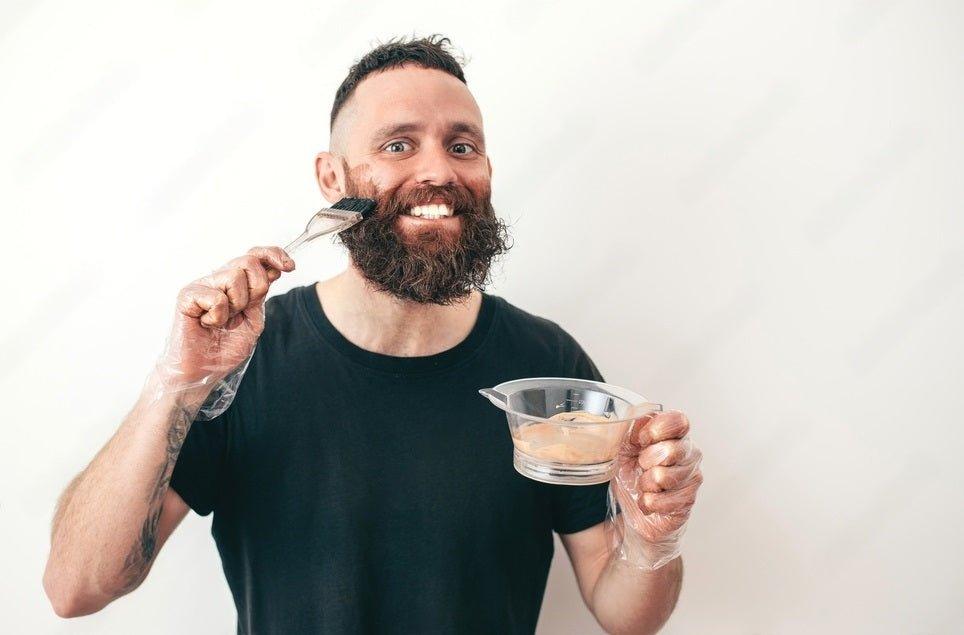
Grey beard hairs are completely natural, but if you'd rather not have them, dyeing your beard is a legitimate option. Done properly, it looks natural. Done poorly, it looks obviously artificial. The difference is mostly in preparation, product choice and technique. This is the complete guide to dyeing your beard, from choosing the right shade to aftercare that keeps it looking fresh.

- Always patch test 48 hours before applying beard dye, reactions can be serious
- Choose a shade 1–2 tones lighter than your target for a more natural result
- Beard hair is coarser than scalp hair and may need a longer processing time
- Condition the beard thoroughly after dyeing to restore moisture lost during processing
- A consistent touch-up schedule (every 3–4 weeks) keeps the result looking intentional, not grown-out
Is Dyeing Your Beard Different from Dyeing Scalp Hair?
Yes, significantly. Beard hair is structurally coarser and has a different cuticle pattern than scalp hair. Facial skin is also more sensitive than the scalp and reacts differently to the alkaline chemistry in most hair dye formulations. Using scalp hair dye on a beard is possible but riskier, the skin under the beard is more prone to irritation and allergic reactions.
Dedicated beard dyes exist precisely because of these differences. They're typically formulated with lower concentrations of the active dyeing agents and include conditioning components for the facial skin. If you're dyeing for the first time, start with a product designed specifically for beards.
Choosing the Right Shade
The most common mistake men make when dyeing their beard is going too dark. A shade that perfectly matches your target colour on the box will almost always look unnatural on a beard, too uniform, too dense, too obviously artificial.
The reason is that natural beards aren't a single solid colour. They have lighter and darker strands mixed together, lighter tips and darker roots, and variation across different areas of the face. A single, perfectly even dye job eliminates all of that variation and reads as fake.
The fix: choose a shade 1–2 tones lighter than what you'd naturally select. This leaves enough variation to look real. If you're covering grey, the grey strands will absorb the dye slightly differently than the pigmented strands, which naturally creates variation, so you can get away with a closer match.
"Go one shade lighter than you think you need. You can always go darker on the next application, you can't undo a colour that's too dark."
The Patch Test: Non-Negotiable
Hair dye, even products marketed as "natural" or "gentle", contains chemical compounds that can cause allergic contact dermatitis. On facial skin, this can mean severe swelling, blistering and pain. The reaction can develop even if you've used the same product before without issues, because sensitisation can occur over time.
Apply a small amount of the mixed dye behind your ear or on the inner arm. Leave for 24–48 hours. If you see no redness, itching or swelling, proceed. If you do, do not use the product.
This step is not optional. Reactions to beard dye are among the most common causes of cosmetic-related emergency visits.
Preparing the Beard
Dye works best on clean, dry beard hair without product buildup. Wash the beard 24 hours before dyeing (not immediately before, freshly washed skin is more permeable and more susceptible to irritation). Do not apply beard oil or balm in the hours before dyeing.
Apply a thin layer of petroleum jelly or barrier cream along the skin edge of the beard, the neckline, cheekline and the skin at the moustache boundary. This prevents the dye from staining the surrounding skin, which is particularly difficult to remove from the skin above the lip.
The Application Process
Mix the dye according to the instructions (usually developer + colour). Apply using the brush or applicator included, working in the direction of hair growth. For a beard, start at the sides where the hair is densest, then work toward the chin and moustache.
Leave the dye on for the processing time indicated, but check at the minimum time first, especially if you're going for a lighter result. Beard hair is porous and can absorb colour faster than scalp hair in some cases, though denser areas may need the full processing time.
Rinse thoroughly with lukewarm water until the water runs clear. Avoid hot water, it opens the cuticle and can cause the colour to fade faster.
Aftercare: Restoring Moisture
Dyeing strips moisture from the hair. Immediately after dyeing, apply a generous amount of beard oil to the freshly coloured beard. This replenishes the hydration lost during processing and helps the cuticle close down around the new colour, improving longevity.
For the next 48 hours, avoid washing the beard with shampoo, water and detergent will fade fresh colour faster. Rinse with plain water only. Resume regular shampoo use after 48 hours, but reduce wash frequency slightly (twice per week instead of three times) to extend colour life.
Touch-Up Schedule and Long-Term Maintenance
Grey roots become visible at different speeds depending on beard growth rate and how much grey was covered. Most men find a touch-up every 3–4 weeks keeps the result looking intentional rather than grown-out.
Don't dye the entire beard every touch-up. Apply new dye only to the areas with visible new growth, applying repeatedly to already-coloured hair causes buildup, uneven colour and unnecessary chemical exposure to the skin.


